
 Styling: Pure hell, or your secret weapon?
Here goes another article about the more “in depth” considerations of a professional photographer. This article is about styling matters.
When you plan a shoot, how much styling is involved? Do you think up an idea, hire a model (or beg a friend to come by), tell her to bring her own clothes and hope for the best? Well, if you do this and you’re really really lucky (ie: she has the right look and has her own great sense of style), you may get some decent shots. And I also recommend you buy some lottery tickets. But if that’s your habit, in reality your results are more likely to be sloppy and vague.
A properly styled shot looks intriguing, interesting and totally real. It carries a message and an edge that an unstyled shot just never will. Styling is often invisible. You don’t look at a shot and think, “wow, that was extensively styled” – you look at it and think, “That’s a fantastic shot.. and man…I can’t even put my finger on why.” The “why” is that the shot is harmonious. Colors play wonderfully off each other, the right model has been chosen, the clothes, background and accessories tell a story, and altogether, it’s a hit.
When I plan any shoot, I do my background work first. I consult with my stylist, I research my subject, I buy the right authentic props, and I plan my details meticulously (just ask my staff, they will tell you with a groan). My team and I do extensive research to determine exactly the look we want to portray and how we’re going to do it, down to the most unimaginably small detail. Why do we push so hard at this? Because it works. And our extra effort is worth it on payday—yes, the costs of working this way are higher, but the returns are higher too. Styling is a tricky business, but when you do it right, the rewards can be fantastic and the quality of your work skyrockets into another level.
 Are you an “A” movie or a “B” movie?
It drives me nuts when I’m watching a film and all of a sudden, some sloppy styling jolts me out of the experience. A classic example is when a guy is running hard and the camera zooms in for a close-up. He’s sweating…. but in perfectly straight, sprayed on lines. Um, nice. Or how about a scene that happens in the wrong place? Two high finance stockbrokers are having a dramatic conversation, but for some unknown reason.. they’re having it in a random park? Sure…
The point is that to elevate yourself from B-movie status to A-movie status just takes some attention to detail. Think about your concept and really study it. Don’t just jump in and shoot.
Behind-the-scenes and a working example: how we styled our “Cool Teens” shoot
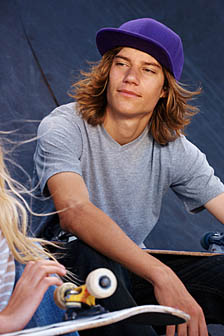
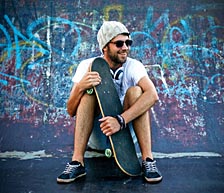
This project began when I decided to do a shoot featuring some cool teens hanging out and being, well, cool. I wanted some of them to have interesting props — skateboards in this case.
 Step 1: Research and planning. My stylist and I went down to a local skate park and observed the kids. What were they wearing? Which shoes? What brand of hat, which sunglasses? What colors were hot? How did they walk, talk and position themselves naturally? How did they hold their boards? What kinds of equipment were they using? How old were they, what kinds of haircuts did they have? After a couple hours of observing we compiled all this information. Then we planned out our colors and the overall look, down to the nitty gritty.
Step 2. Accessories. No corner cutting here. We figured out which skateboard brand these kids were actually using and we went out and purchased them. (Not cheap! They must have some allowance?!).
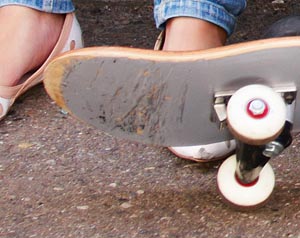 Step 3. Making it look real. Then we took one look at the brand spakin’ new shiny boards we’d bought and realized we had to beat them up, badly. Three long hours of me trying to skate and lotsof intentional efforts to scratch and wear down the boards seemed to do the trick (yes it bruised a bit).
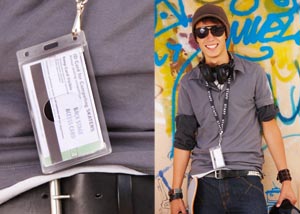 Step 4. Small details. We noticed the kids wearing ID tags and decided to create our own version. We designed our tags in the right color (remember during the research stage we had decided on this) and put them in laynyards. This way we owned the copyright and didn’t need to worry about extensive photoshop down the road. Great.
Step 5. Models. We looked long and hard for the right models. We wanted kids who looked natural, funky and like they would fit right in with the kids we’d studied at the park. When we chose our models we talked with them about exactly what we were going for and had them practice their natural smiles. We got them feeling comfortable and natural with each other by playing some icebreaker games.
Step 6. Shoot. Everyone was well prepared before the shoot. The models knew what was expected of them, the clothes were ready, the boards were battered and cool, and we were all eager to go. The shoot went even better than I expected. I followed our plan, and as I always do, I also tried some unusual angles and ideas that came to me in the moment, not knowing how they’d fit in at the end but hoping for the best. The results of the shoot were fantastic and they’ve been very successful images in my portfolio.
Conclusion
Styling can be pure hell if you ignore it completely or if you let it control you, but if you take control of the process it can be your ace in the hole. Hire a fantastic stylist who delights in details and I guarantee you that it’s a good investment and that the quality of your work will skyrocket. Or, if you are a one man or one woman show, that doesn’t mean you can’t do a lot of this on your own. Shoot what you know, watch watch watch the real wold around you and then plan, plan, plan so you can create authentic shots that are beautiful, edgy and cohesive. Good luck.





Good article, good info. Can you please add Twitter & Facebook links to your Stumble and Digg bar so we can easily share?
Great article Yuri, as always!
How many days do you spend actually preparing a shoot? From what I’ve seen on other videos you do 8h shoots, but there should be extensive preparing before that… what, 3 days doing nothing else?
I’ve got an odd question… Since you mentioned styling and choosing the right models, do you feel your shots with caucasian blond (m/f) models sell more than others? Is that a decisive factor?
Nice article, nice point of view, like always you surprise more and more!
Very nice question Miguel (from Portugal or not?), the blond models really sell more?
cheers and thanks for sharing again
It’s a very valid point that styling, when good, is near invisible. How much do you consider the longevity of the styling (resulting photos) when you go about this kind of young-and-cool type of photo shoot?
I mean it is a more “risky” business than say a few guys in black on black generic business cloths.
Thanks for a good and open site and commitment to the tog-community 🙂
Good article, good info.
I will plan more in mey next project
Terrific info Yuri. It’s great to take a look at the behind the scenes. A lot of people figure you just arrive on the scene and start shooting, when it’s a heck of a lot more than that. I offer a bit of a similar type of posts on my blog, but on the very different topic of landscape photography. I was always very intrigued with what goes on behind the sort of photography you do. Thanks for sharing!
What great insight. Thanks for sharing, Yuri.
Jake
Yes, from Barcelos, Portugal. You too? I’ve seen your blog, a lot of stock info there 🙂
ok, Lisboa! Was on your blog 🙂 Happy shootings
Thanks Miguel, i have checked also your portfolio in XP and IS.. very nice pictures imho!
cheers and also good shootings
Cool. I will check it out. 🙂 Yuri
Styling was always a huge issue in school and remains an issue for me now that I am out and getting started. You seem to follow a “Just Do It” perspective and sometimes that is exactly what needs to be said and done, but what do you do if that much time is just not allotted in the budget?
Thanks for the post.
Great info Yuri! Thank you for the valuable tips. I learn so much from you and this site every day.
Thanks for the useful info. It’s so interesting
Styling is a very important part of any shoot and your words of wisdom Yuri are welcomed by all. I liked the part where you felt the new angles just come to you while you were shooting and you are never afraid to take a picture, that is what true photography is all about, it’s never stagnant. Keep raising the bar Yuri and inspire us all.
Great info here. I’m in the process of moving from editorial travel and music into other areas and posts like this are a great help. Many thanks.
Wow! Another amazing blog post! I must ask my sister (she is a stylist) for helpmore often! Shame she doesn’t live with me! 🙁
Thanks Mr. Yuri!
Really good article Yuri! As an illustrator I dont actually need to hire a stylist…but I do need to respect my own style…Although I illustrate different stuff, I tend to follow 2 or 3 different styles for series.
Very nice blog you have here Yuri! Some good solid advice.
Have you thought about posting anything on post production/retouch?
I think people would like to know how the/your process works from raw to final product.
Count me in as another vote on a post about retouching and post production.
Keep up the good work and thanks.
Dear Yuri, it’s always a pleasure come back here and realize that you still find time to write new topics and give us some feedback. Cool! Well, as always after the “congratulations thing” (that you really deserve) I came with some questions, hopping that you find time and patient to talk about..
How do you manage the “up to date style production” considering the “life time” x “Cost per image” x “RPI” in order to predict the income in the year to come?
Also I would like to bore you a little more with a couple more questions even if it is not pertinent to this topic..
How do you manage the time invested in the previous shooting preparation. This seems to be really time-consuming and expensive. Looking at the video showing your studio I´m asking myself if this is really an example of your day to day shooting. If you take so many time planning your shootings, how many days per week do you actually shoot? And while you personally don´t, does the studio stay unused or do your assistants shoot in the meantime the typical stock photos in your studio?
And I have another question: I´ve read that you only employ ten people and wonder how that works. Do these people really do all the work (photoshop, upload, casting models and locations, styling, shopping for props, make up, shooting itself, administration of your company)? Or do you have a part of these works outsourced to freelancers or other companies?
And a finally question for the moment 🙂 would be:
– a normal shooting day results in how many photos online?
Once again, thanks a lot for your helpful support .
Your posts are valuable and very well put together–but the thing I have to ask (with sincere respect): isn’t it ironic that you demonstrate the kind of research and appropriateness that’s necessary in order to produce a good product–but since (I believe) you are producing a product that will ultimately get used as a generic image (stock photos) that attempt to be appropriate for many different applications? That is, the consumers of the stock photos you create are using those images in place of, or instead of ,”authentic” and original content.
I think there’s a logical market for stock photos… maybe this is the just nature of it. And, really, what you’re doing is helping is stock photographers make better (less sucky?) stock photos.
Fantastic advice as always, Yuri. I dont yet have the ‘balls’ to get into model photography yet, but i think your tips apply to photography as a whole. The a movie/b movie concept is always in my head when i shoot but its good to be reminded of this.
Looking forward to your next videoblog.
Steven
great advice, except you missed one huge issue. skateboarders and rollerbladers NEVER hang out together. skateboarders have a nickname for rollerbladers: fruit-booters because it’s so damn easy compared to their sport. same story for guys that ride bmx…just don’t hang out with the other two groups. also, where are the holes in the jeans? and who the heck uses HUGE headphones these days? lots of your work is great, but this shot of the group looks styled…and is poorly done. would have been better off just grabbing a few of the actual skateboarders, asking them to smile, and getting some authentic photos. would have saved tons of time too!
Thank you very much quite inspiring ariticle.
You are on to something interesting here. Notice that only the girls are using rollerblades. From where you are at in the world your statements might be valid, but not here. We found both rollerbladers and skateboarders to hang out together and not separated as you say. We found very few girls that actually skateboarded, but quit a few that rollerbladed. We also found quit a few people wearing headphones, because they look “cool” and not for the practical reasons. The wholes in the jeans we can’t do, because that will send a whole other kind of signal that will damage sales. We did not want to create an image that was authentic to the Skater or Rollerblader, because skaters and rollerbladers are not our customers. We wanted to take a few of the central features from those disciplines to create an image that appeal to our customers, the designers (the buyers).
By the way. Don’t be a ghost. Come around again and reply. 🙂
hi
i love someone working there
i dreamed of him before i see him here
i fall in love with him without any idea about how is him
and i made pic of him before see him
i just wanna know your mail coz i really need 2 talk 2 you Yuri Arcurs
i need your mail please
n your pics are sooo great and nice
it’s the pic of my lover
http://www.dreamstime.com/stock-photo-fashion-shot-of-a-young-man-image1308160
I have no words to say…
Thank you so much! Can you say the name of teens please? I’ve seen them everywhere, so now I think they have lot of sucess, specially that blond girl with huge smile…:D
Good job! 😉
Hello can somebody please tell me the names of the models?? Thanks! 😀
Where can I find a list of the models? Please respond I have been searching for a long time.
Hi Yuri, I would like to know how much a shoot like this costs? It must be quite a bit because you won’t get good stylists etc otherwise! How do you calculate afterwards how much the images need to sell to at least break even? How foes someone like me get decent photos when I am starting out in the micro stock industry? It seems you have to lay out a lot of capital per shoots and you run the risk of getting the images rejected!
Regards
Dorian
Perfect capture!They look like urban knghtis! I’d never guess that they’re cooks actually! 🙂 There are all those little elements but I guess their hair is the main tool for self-expression. And they use it perfectly!
I was looking at some of your articles on this site and I think this website is very informative!
Keep putting up.
Appreciate it for helping out, wonderful information.