
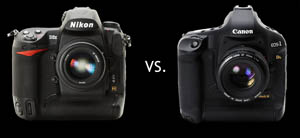
 Canon vs. Nikon: Battle of the Titans
I recently bought a new Nikon D3X and after playing with it I’m now ready to let you know how it stacks up against the some other comparable cameras on the market, specifically the Canon 1Ds Mark III.
Today in my studio you’ll find the one Nikon D3X, three Canon 1Ds Mark IIIs, two Canon 5D Mark IIs, and one 39MP Hasselblad H3D-II. Because I’m constantly swapping between bodies, a lot of practical experience has surfaced about these cameras. Through time, trial and error, I’ve realized that each body has its own particular place to shine. I also get a lot of feedback from my assistants as to which cameras they prefer to shoot with and why.
Sharpness Results – A Breakdown
You’ve heard me say it before, and I’ll say it again: I am a huge stickler for sharpness. When our new Nikon D3X came in, the first issue my team and I wanted to test was sharpness. How much detail could we capture? Could we use this camera for stock production or maybe even for fashion (which probably has the highest degree of quality concern in the photography industry)? Could we get a similar or maybe even better result than with the Canon (or even the Hasselblad)?
We tested the body with a couple of the sharpest Nikon lenses and the result was surprisingly good. (I must say I was personally quite happy that I had not just wasted $8,000 USD, plus another $5,000 USD on lenses.) Here are the results:
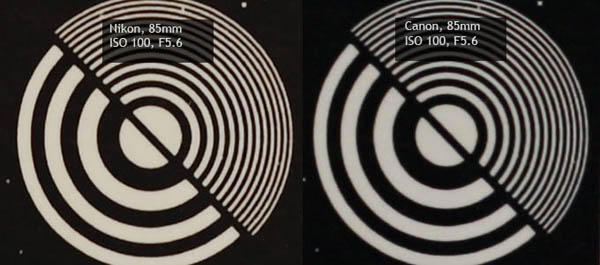
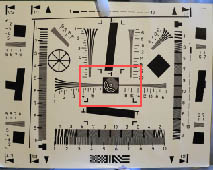 Center Focus
The first thing we tested was the Nikon 85mm 1.4 vs. the Canon 85mm 1.2L. I personally use the 85mm a lot and find this focal range very suitable for stock, so this was a very interesting test for me. We tested the center area in sharpness as the first. Remember that to do this comparison we had to downsize the nikon file to match the canon.
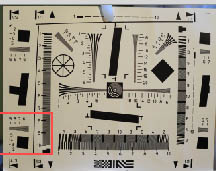 Peripher Focus
The second thing we tested was the Nikon 85mm 1.4 vs. the Canon 85mm 1.2L in it’s peripher focal abilities. Here are the results:
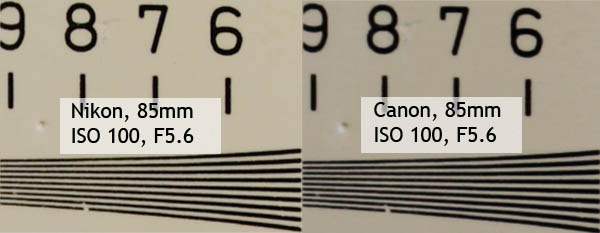
With the right lenses the Nikon easily matches the Canon. But if you make the mistake of pushing some Nikon lenses to the edge, they certainly do not do justice to the full 24MP that the D3X is capable of handling. To get great sharpness out of this camera, you really need to know which F-stop range each lens achieves maximum sharpness within. Once my team and I figured out the right parameters, we soon learned to work beautifully with this camera. We ordered a whole bunch of lenses and returned the ones we did not find sharp.
Unfortunately, we did not find any of the Nikon Zoom lenses in the mid-range 24-70mm to be sufficiently sharp for our needs. We were however extremely impressed by the Nikkor 14-28mm f2.8, which was completely in its own league with outstanding sharpness and fringing kept in check. Canon simply does not have a wide zoom lens or prime that matches this lens in sharpness. (In fact, I believe you would have to go to medium format to match this lens.)
Before the new Nikon, I would always go to my Hasselblad prime 28mm if I was doing a wide shot. The wide Canon lenses weren’t worth using because they’d fringe the whole thing so much that it took my outsourcing staff hours per file to fix the issue. Now it seems I can shoot wide without having to get the heavy firearms in position. Great!
So to the big question—in terms of sharpness, could I do stock or fashion with this lens? The answer is yes….but.
The “but” comes in because you really have to know what you’re doing and chose just a few handpicked lenses to work with. If you look at it from an overall perspective, the canon lenses perform slightly better all around. After much research we settled on using these lenses from Nikon:
Nikon 14-24mm f2.8 (impressively sharp lens)
Nikon 50mm f1.4 (useless below f3.0, sharpness lacking, will be rejected for stock)
Nikon 85mm f1.4 (too blurry below f2.0, very sharp at f5.6)
Nikon 70-200mm f2.8
Noise Breakdown
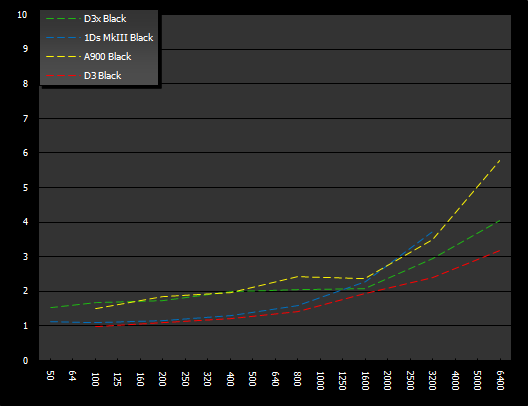
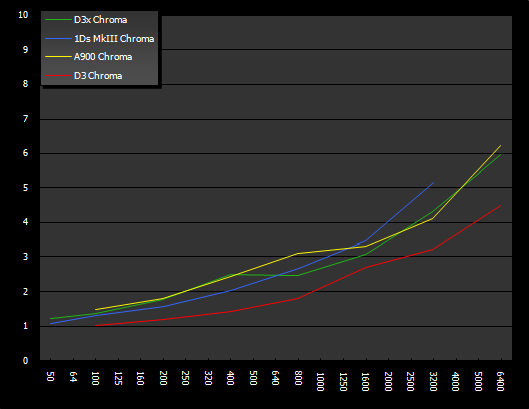
Noise is a problem for Nikon. If you remove the noise reduction setting that is on by default and take a look at the unfiltered RAW file, the Nikon D3X has much more noise than the Canon 1Ds Mark IIIs RAW. With both cameras set to “no noise reduction”Canon significantly outperforms. In fact, a Canon ISO 1600 file looks almost like a Nikon ISO 800 or 640. We borrowed the graphs from Dpreview to illustrate this:
Luminance noise graph (black patch)
Chroma (color) noise graph
We also did our own noise test on the Nikon:
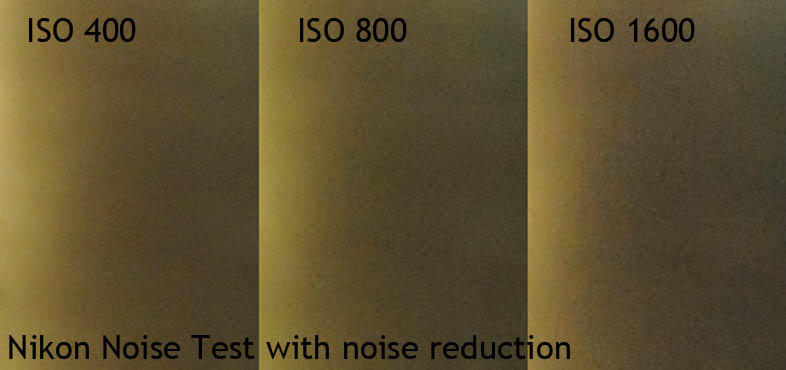
This was quite a surprise to us because most online forums had predicted that Nikon would be better than Canon at handling noise. In retrospect, this is probably because a) Nikon has turned their noise recognition on by default, making most images look much more noiseless than they really are, and b) Nikon is often regarded a photojournalistic tool and the choice for tough conditions in photography. However, when going above 1600 in ISO the noise handling of the Nikon looks to be slightly better than the Canon. But shooting above ISO 1600 is a very rare thing, so I would have liked to see the Nikon better at the lower ISOs.
Unfortunately, Nikon’s auto-noise reduction makes their files look slightly filtered, so to my team and I (and some very qualified iStock inspectors) these files qualify for rejection by default. Not good.
Bottom line: How bad is it really? Well, because the margins are small in today’s digital camera offerings in terms of quality, this noise issue is not enough for us to disqualify the Nikon in any way. To be realistic, maybe only a handful out of about 1000 people in the world are capable of looking at a Nikon file with the default noise reduction turned on and say “hey this file looks slightly filtered,” so in real life, this simply does not matter. Will this work for stock? Yes, but not above 360-400 in ISO.
Usability
As I mentioned earlier, because the margins are small between the top end Canons and top end Nikons, usability is the real tie-breaker. Nikon has a far better reputation for listening to their photographers than Canon, and this is plainly illustrated by the features available in the new Nikon D3X. (In fact, Nikon listens so much, that I am expecting a phone call from them to talk about their new camera next week.)
The Canon Mark II, 16mp, was a nightmare in terms of usability. To change basic settings you had to free both hands and press three buttons at once. To review an image, press two. This camera was a joke and any photographer shooting with it for five minutes prior to release would have told them so. Even Canon’s basic point and shoot cameras launched at the same time had better usability options at that point. The Canon 1Ds Mark III was greatly improved in terms of usability but it now risks being compared to the new Nikon D3X and frankly, it looks like a joke again. Let me take you on a tour of the small differences in the D3X that make a real difference in real life:
Instant, one press, 100% cropped view of focus area (the little red spot in one spot metering). This feature is unbelievable. For the first time in digital history on a top end camera, I can actually routinely check if I am shooting in focus. To navigate to a 100% view of the focused area on a Canon takes anywhere from 10 to15 button presses (with both hands) and requires a cognitive effort that is better used shooting. This Nikon feature is simply fantastic and is something that can be found on other Nikon high-end cameras as well.
- Two CF-cards slots with backup capability. Incredible. Shoot jpeg small res for inspection on one card and shoot RAW on the other, or shoot double for backup. Fantastic!
- Two custom assignable buttons for any purpose. Genius.
- Simply outstanding auto focus and AI focus. Much better and more precise than Canon. In other words, you can actually count on it being in focus when the red spot lights up. Canon has a problem here and this was actually one of the reasons why I went medium format a year ago, because Hassy autofocus is extremely precise.
- Impressive buffer size and continuous shooting capabilities. An impressive 7 frames per second really beats Canon’s lumbering 4 frames per second.
Things we are missing on the Nikon:
- Custom definable shutter delay time. Default is 1 second, but too long of a delay and we would like to see this alterable to lower settings. Shooting in “silent” mode on the Canon 1Ds Mark III gives my assistants about 50% sharper files. The silent mode has a short shutter delay of maybe 300-400 milliseconds. This is perfect and matches the shutter delay I have on my Hasselblad. On the Hasselblad I can customize my shutter delay in internals of 50 and 200 milliseconds. We would like to have seen the same option on the Nikon. This fixed in firmware and would require little effort.
- One press custom white balance test, such as on the Hasselblad. On the Hasselblad you can press one button while pointing the center of the lens at a gray card and the white balance is automatically adjusted and shifts to custom white balance settings. This feature is quit addictive and shooting with Canon or Nikon you constantly wonder why they have not created a similar function.
- Sensor cleaning. Automatically.
Conclusion
The Canon has lower noise levels and the lenses perform generally better, but what does this matter if your images are more out of focus, if the camera is much harder to work with on a daily basis and if you can get the same results form a Nikon by just choosing the right lenses and get another 3 mega pixel on top? For stock and fashion, about 90% of what we shoot is shot on ISO 100 and here the two cameras are so close in their noise levels that this is not something that would ever be a defining matter in choosing a Nikon or a Canon.
Formerly, I would shoot most things on my Hassy and move down to my Canon when shooting subject material that required flexibility or that was fast moving. Now that I’ve met the Nikon, this will change for sure. I plan for my basic setup going forward to be: Hasselblad for studio and high-resolution stuff and Nikon for the rest. Because I know what lenses to use, never shoot much more then ISO 400 anyway and need to count on the focus system, the Nikon D3X is a dream come true. I will report back a couple of months into using the Nikon and let you know if I still feel the same way.
What’s Next
If Canon is to stay competitive then they have to start listening to their photographer’s needs and they also have to come up with a new top model within the next six months or so. We will probably see a full frame 28MP just around the corner. I predict Canon will supplement this new camera with a new lineup of two or three central range lenses with their new glass, which will create impressively sharp images even at this resolution.
Two years from now, both camera brands will have to consider going beyond full frame. While Canon might be able to do this (with new and better lenses in the horizon) this might be a problem for Nikon unless they upgrade their current lineup of lenses. The challenge for Canon will be usability and functionality as well as developing a better focus system. The challenge for Nikon will be noise control and better lenses.
Nikon should probably start working on a semi-medium format top-end camera with a new and physically larger lineup of lenses that can handle the extra mega pixels required in the future to come. Nikon could also win even more on usability by launching a TLC compatible radio controlled flash series, instead of their nearly useless infrared system. This would be a massive winner for press photographers, location photographers, travel photographers, wedding photographers, etc. The alternative, without TLC, is to bring four or five Pocket Wizards along all the time, which fills up quit a lot of space in the camera bag, needs batteries…and is expensive…
So, to conclude my review, I’d say that the Canon 1DS Mark III and the Nikon D3X, are neck and neck in many regards – each trumping the other in certain areas. Overall, I choose the Nikon D3X as my winner for its super focus capability and its great functionality. Stay tuned for more reviews to come.






Have you tried any of the Zeiss lenses on the D3X ? As I am just getting my feet back into the photography world and when I was shooting , a very long time ago before digital , I used the Zeiss lenses on my old Canon F-1.Very clean and great contrast, but that was on film….
I am recommending the Canon EF 50mm f1.8 Mk II on my blog site, as one of the low cost must have primes, but I’m curious if you ever tried it and if you did, please share with us your input.
Thank you in advance.
Yuri.
Very straightforward review. All to the point!
You put lots of info in not many words and graphs. Well done!
Great Review. I am on the fence. I have too much invested in Canon glass to switch to Nikon and start over. I am unhappy with Canons focusing and camera controls. I will wait to see what they come out with this next year. I sure hope they have been listening to working photographers.
http://www.the-digital-picture.com/Reviews/ISO-12233-Sample-Crops.aspx?Lens=106&Camera=453&Sample=0&FLI=0&API=1&LensComp=641&CameraComp=614&SampleComp=0&FLIComp=0&APIComp=2
Hey there, have you been thinking about comparing the sony alpha full frame (a900) on 25 mp with the Canon too, for portraits and stuff like that I heard it should be the number one, at least at Nikon’s niveau and totally kicks Canon’s ass in everything. Could be funny seeing a comparing here. The alpha is quite cheap.
Hello, very intresting analysis of canon vs nikon. I have myselft spent the last year trying to decide wich system I will go for. My conclusion was that I like Nikon because of the colors. But I do think for m purpose canon has a lot more choices on lenses.
One comment on your noise analysis. Nikon 3x is not the best noise camera from NIkon , the noise king is D3 and d700. But of course they don’t have the same resolution.
I love my canon 50d and looking at upgrading to a full frame camera ,, i am thinking the 5d but i am thinking of changing to nikon d700 for image quality and autofocus not failing , i do alot of artistic photo and maybe a wedding ounce in a blue moon what do you sugesst?
Very well written with an impartial eye. I’ve been on the fence – as a Canon shooter, all my life, I have the experience (and equipment) that would make the obvious upgrade the 1Ds Mk.III. However, also suffering with the well-known soft focus of Canon equipment, I’ve been considering bringing the Nikon D3x on board. With this review, I think I have made up my mind to go with the Nikon with some good Nikkor glass. The clarity of focus is amazing. As for noise at high ISO settings, I rarely shoot below higher than 200, so that should be a moot point. Thanks for the well-written review to help this fence sitter get a sense of direction!
Your review was so good I almost bought the camera before checking how legit your photos are….you know, my own little background investigation of whose opinion I am listening to. thank you so much! love your work.
I’m not sure which converter you used to test low ISO noise, but D3x, is the least noisy camera at ISO 100 on the market.
But it is true, in most respects the two cameras are so similar, going either way will not be a sacrifice of quality. In the end its the photographer, not the camera.
Still a good read!
Nice and useful review.
I actually use Nikon and my focus is on low noise at high ISO.
Dear Yuri
Have you tried the 105mm 2.0 DC lens (it is the lens that Rembrandt would have chosen!)?
Michael
fMjywl Touchdown! That’s a really cool way of putting it!
Yuri, what camera do you recommend to start taking profesional photos? Thank you in advance for your recommendation
seo reseller program
Pingback: Karel Donk's Blog » Blog Archive » Canon EOS 5D Mark II – A Piece of Shit
hi! Is there any similar review for Canon lenses written by you as well? btw. what do you think about Canon 550D? Thank you for an answer. Kamil
Thanks for the article, Yuri.
Have you ever try the 17mm TS from Canon for your Wide Angle Pics. I was purely impressed by this lens while shooting landscapes in Grand Canyon. There is some fringing but almost negligible. You can see a sample of panorama done with just shifting the lens here: https://www.facebook.com/photo.php?fbid=207620912620786&set=pu.146451292071082&type=1&theater
This is an interesting review + discussion. Thanks…
This is an interesting review + discussion. Thank you…
i like camera plz help me to buying camera
Hi Youri,
thanks for your test. I hope, you will test the new canon Eos 1- D X on the similar way.
With Regards!
Piotr
Hi Yuri,
Thanks for your review.
FYI, I am Canon user. May I know which lenses can produce sharp and great photos? Or which lenses are worthwhile to buy? Await for your great info…
Ellie
Pingback: Making Money with Your Camera – Peter Gregg | Valuedomain.org
Findnig this post solves a problem for me. Thanks!